
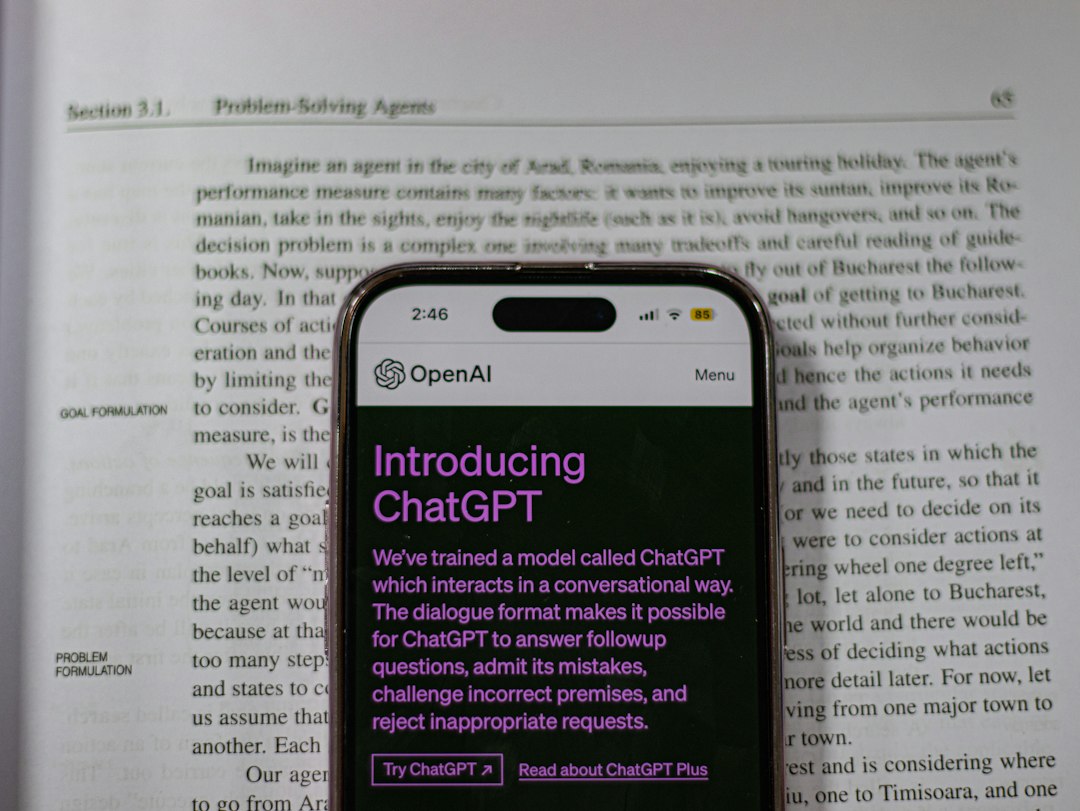
ChatGPT is an advanced artificial intelligence model created by OpenAI that can generate text in a way that resembles human writing. Its primary goal is to facilitate communication between humans and machines, which can be useful in many areas, from customer service to content creation. Thanks to its ability to understand context and generate responses, ChatGPT is gaining popularity as a tool that supports a variety of tasks.
In practice, ChatGPT can be used to conduct conversations, answer questions, and even create creative texts such as stories or articles. Its versatility makes it an attractive solution for businesses and individuals who want to increase the efficiency of their activities. However, it is worth understanding how this model works in order to fully utilize its potential.
Basics of artificial intelligence – what drives ChatGPT?
Artificial intelligence (AI) is a field of computer science that focuses on creating systems capable of performing tasks that require human intelligence. ChatGPT is based on an architecture called the Transformer, which was introduced in 2017. This innovative structure allows the model to efficiently process and analyze large sets of textual data. As a result, ChatGPT can grasp the nuances of language and context.
At the heart of ChatGPT’s operation lies a process of machine learning, which involves training the model on huge datasets. The model learns to recognize patterns in language, enabling it to generate responses based on prior interactions. It is precisely thanks to these fundamental principles of artificial intelligence that ChatGPT is able to provide accurate and coherent answers.
How ChatGPT learns language – the role of training data

Training data play a key role in the process of ChatGPT learning. The model is trained on massive collections of texts that come from various sources such as books, articles, or websites. This gives it access to diverse writing styles and topics, allowing it to better understand the context and users’ intentions.
However, it is important that the training data be appropriately selected and varied. Sometimes they may contain errors or outdated information, which can affect the quality of the generated responses. Therefore, the data selection process is extremely important – the better the data, the better the results. Users should be aware that the quality of ChatGPT’s responses may vary depending on the context and topic of the conversation.
The response generation process – how does the model create text?
Generating responses by ChatGPT is a complex process that relies on analyzing context and prior interactions. When a user asks a question or formulates a sentence, the model processes that information and compares it with the data it was trained on. It then selects the most appropriate words and phrases to construct a coherent response.
It is worth noting that ChatGPT does not “understand” language in the traditional sense – instead, it operates on statistics and patterns. This means that its responses are the result of probability analysis rather than deep comprehension of the subject. Nevertheless, thanks to advanced architecture and large amounts of training data, the model can generate texts that often appear natural and logical.
The importance of neural language networks in ChatGPT
Neural language networks are the foundation of ChatGPT’s operation. They enable the model to process information in a way that resembles the human brain. Thanks to layers of neurons, the model can capture the complexity of language and the relationships between words and phrases. This allows ChatGPT to generate high-quality texts.
One of the key elements of neural language networks is the attention mechanism, which allows the model to focus on relevant parts of the text while generating responses. Because of this, ChatGPT can better understand context and provide more accurate answers. It is this technology that makes the model so effective at understanding and generating natural language.
The role of algorithms and optimization in ChatGPT’s work
Algorithms are an integral part of ChatGPT’s functioning. They guide the learning process and the generation of responses. In the case of ChatGPT, various optimization techniques have been applied to improve the model’s performance and the quality of generated texts. Thanks to these techniques, the model can process data faster and provide responses in real time.
Optimization also involves adjusting the model’s parameters during training. As the model learns from the training data, algorithms help it adapt its behavior to better answer users’ questions. This continuous improvement makes ChatGPT increasingly precise and useful in everyday interactions.
User interaction with the model – how does communication work?
User interaction with ChatGPT takes place through a simple text interface. The user types a question or sentence, and the model generates a response in real time. Context is a key element of this communication – the more information the user provides, the better the model’s responses will be.
It is important to remember that ChatGPT has no long-term memory – each interaction is treated as a separate session. This means the model will not remember previous conversations or build future responses on them. Therefore, it is important for users to be clear and precise in their questions to obtain more accurate results.
Examples of ChatGPT applications in everyday life
ChatGPT is used in many areas of everyday life. It can be used to support customer service by answering questions about products or services. This allows companies to save time and resources while improving the quality of their support.
Another example of use is content creation – bloggers and writers can use ChatGPT as a tool to generate ideas or even whole articles. The model can also support learning foreign languages by conducting conversations or translating texts. Finally, ChatGPT can be used to solve technical problems or provide advice on everyday challenges.
Limitations and challenges of artificial intelligence in ChatGPT
Although ChatGPT is an advanced tool, it has its limitations. One of the main challenges is the lack of understanding of context over a longer time span and the possibility of generating imprecise or misleading responses. The model may also reproduce errors contained in the training data, leading to misinformation.
Another significant limitation is the lack of emotions and empathy in interactions with users. Although ChatGPT can generate texts that resemble human speech, it does not have the ability to feel emotions or understand human feelings. This makes it less effective than a real person in some situations.
Safety and ethics of using ChatGPT
Safety and ethics of using ChatGPT are important issues to consider when using it. There is a risk of abuse related to generating misinformation or harmful content for other users. Therefore, it is important to use this tool responsibly and consciously.
OpenAI takes actions to minimize the risk of abuse by implementing ethical guidelines and monitoring the model’s usage. Users should also be aware of potential risks associated with using AI and follow safety principles when interacting with the model.
The future of ChatGPT – how will artificial intelligence develop?
The future of ChatGPT and artificial intelligence in general looks promising. As technology advances, we can expect increasingly sophisticated AI models that will be able to better understand users’ context and intentions. It is also possible to develop features related to emotions or empathy in interactions with users.
As technology develops, new applications for AI models will emerge in various fields of life – from medicine to education and entertainment. However, maintaining a balance between innovation, ethics, and safety in the use of these tools will be crucial. Collaboration between scientists and society will be key to the future of artificial intelligence and its impact on our lives.
FAQs
How does ChatGPT work?
ChatGPT is a text-generation tool based on artificial intelligence that uses the advanced GPT-3 language model. This algorithm analyzes the input text data and generates responses based on patterns and context.
Can ChatGPT hold conversations in different languages?
Yes, ChatGPT can converse in many languages, as it can analyze and generate text in various languages based on the input data.
Can ChatGPT learn in real time during a conversation?
ChatGPT does not learn in real time during a conversation, but it uses pre-trained data that allow it to generate responses based on analysis of context and language patterns.
What are the applications of ChatGPT?
ChatGPT can be used for many purposes, such as generating content, answering questions, conducting conversations, creating stories, or even assisting in the writing process.
Can ChatGPT replace a human conversational partner?
ChatGPT can be used as a communication tool, but it will not fully replace a human conversational partner. Artificial intelligence has limitations and may not always understand context or emotions as well as a person.
Albert Świączkowski – creator, author, and experimenter exploring the intersection of artificial intelligence, technology, sound, frequency, and human experience. Creator of itSound and projects involving resonance, sound, and interactive technological tools.