
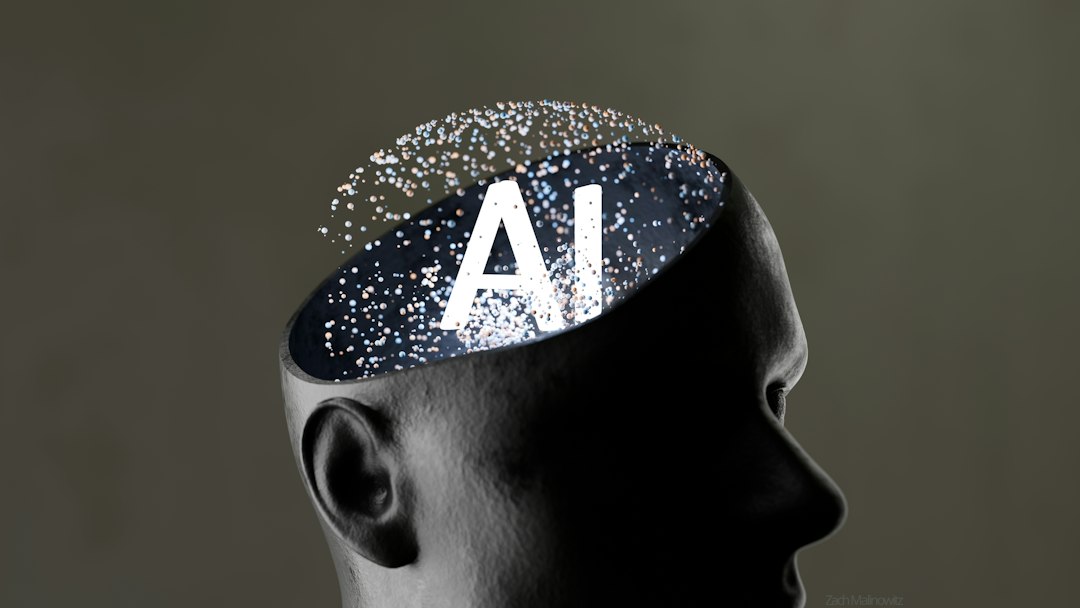
Deep learning is one of the most important branches of artificial intelligence, which has gained popularity in recent years. In short, it is a machine learning method that uses neural networks to analyze data and make decisions. Neural networks, inspired by the structure of the human brain, consist of layers of neurons that process information hierarchically. Thanks to this, deep learning can solve complex problems, such as image recognition or natural language processing.
In practice, deep learning is applied in many fields, from medicine to the entertainment industry. Its development has contributed to significant advances in technology, as well as to the creation of new tools and applications that are changing the way we live and work. It is worth taking a closer look at the history of artificial intelligence development and the beginnings of neural networks to better understand how we reached the current state of the technology.
History of the development of artificial intelligence and the beginnings of neural networks
The history of artificial intelligence goes back to the 1950s, when scientists began to explore the possibilities of creating machines capable of thinking and learning. In 1956, a conference was held at Dartmouth College, which is considered the beginning of formal research into artificial intelligence. At that time, the first algorithms were developed that aimed to simulate human thinking.
The beginnings of neural networks date back to the 1960s, when Frank Rosenblatt presented the perceptron — a simple model of a neural network. The perceptron was able to learn from input data and make decisions based on it. Although its capabilities were limited, it laid the foundation for the further development of neural networks. In the following years, more advanced models appeared, such as multilayer perceptrons, which enabled more complex data analysis.
Architecture of neural networks: basic elements and operating mechanisms

The architecture of neural networks consists of several key elements. The basic building blocks are neurons that process information. Neurons are organized into layers: an input layer, one or more hidden layers, and an output layer. Each neuron in a hidden layer connects to neurons in the previous and next layers, allowing information to be passed on.
The operating mechanism of a neural network is based on a process called forward propagation and on a learning algorithm called backpropagation. In the first stage, input data are passed through the network, and each neuron processes them based on weights assigned to the connections. In the second stage, after computing the error at the output, the weights are updated to minimize that error. Thanks to this, the network learns from the provided data and becomes increasingly precise in its predictions.
Deep learning algorithms: from the perceptron to convolutional networks
Deep learning algorithms have come a long way since the perceptron. As technology and data availability developed, researchers began experimenting with more complex neural network architectures. One of the key achievements was convolutional networks (CNNs), which proved extremely effective in tasks related to image recognition.
Convolutional networks operate by analyzing local image features through the application of convolutional filters. This enables them to capture important patterns, such as edges or textures, making them ideal for visual analysis. In recent years, other innovative architectures have also emerged, such as recurrent neural networks (RNNs), which are particularly useful in processing sequences of data, such as text or sound.
Applications of deep learning in various areas of life
| Metric | Description | Example value | Unit |
|---|---|---|---|
| Number of layers | Number of layers in the neural network | 10 | layers |
| Number of neurons per layer | Average number of neurons in a single layer | 256 | neurons |
| Accuracy (accuracy) | Percentage of correct classifications | 92.5 | % |
| Loss function (loss) | Cost function value during training | 0.15 | unitless |
| Learning rate (learning rate) | Parameter specifying the model’s learning speed | 0.001 | unitless |
| Batch size | Number of samples processed simultaneously | 64 | samples |
| Number of epochs | Number of full passes through the training set | 50 | epochs |
| Training time | Total model training time | 3 | hours |
Deep learning has a wide range of applications in many areas of life. In medicine it is used to analyze medical images such as X-rays and computed tomography scans. Deep learning algorithms can detect diseases with high precision, which can significantly improve diagnosis and patient treatment.
In the automotive industry, deep learning plays a key role in the development of autonomous vehicles. By analyzing data from sensors and cameras, cars can make decisions in real time, which increases safety on the roads. In addition, this technology is used in marketing, where algorithms analyze consumer behavior and help personalize offers.
Challenges and limitations of contemporary neural networks
Although deep learning brings many benefits, it is not free of challenges and limitations. One of the main issues is the need for large datasets to effectively train models. In many cases, obtaining suitable data can be time-consuming and costly. Furthermore, deep learning models are often treated as ‘black boxes’, which means it is difficult to understand how they make decisions.
Another challenge is the problem of overfitting, which occurs when a model learns the training data too well but fails to generalize to new data. To prevent this, researchers use various regularization techniques and cross-validation. Finally, there are also concerns about the ethics and privacy related to the use of artificial intelligence in different areas of life.
The future of deep learning and prospects for artificial intelligence development
The future of deep learning looks promising. As the technology evolves, we can expect increasingly advanced models and algorithms.
Researchers are working on new neural network architectures that will be more efficient and less demanding in terms of computational resources.
It is also worth noting the growing interest in AI ethics and its impact on society. As the technology becomes more widespread, ensuring its responsible use and protecting users’ privacy will be important. It is also possible to develop collaborations between humans and machines, which can lead to new opportunities and innovations.
Summary: the importance of deep learning as a technological breakthrough
Deep learning is undeniably one of the most important technological breakthroughs of recent years. Its ability to analyze large datasets and make decisions based on them opens new possibilities in many fields of life. From medicine to the automotive industry, the applications of this technology are practically limitless.
However, the development of deep learning also comes with challenges and questions about ethics and responsibility in using this technology. Finding a balance between innovation and the protection of users’ privacy and safety will be key.
As we continue research on artificial intelligence, we can expect even greater achievements and changes in our daily lives.
Albert Świączkowski – creator, author, and experimenter exploring the intersection of artificial intelligence, technology, sound, frequency, and human experience. Creator of itSound and projects involving resonance, sound, and interactive technological tools.